The Principle
A small task arrives - a quick reply, a brief action, something that will take ninety seconds. You add it to your list to deal with later. Later you see it on the list, and the overhead of deciding when to schedule it, opening the system, finding it again, and doing the task costs more time and attention than the task itself ever would have. You've managed the task more than you've done it.
David Allen's two-minute rule is a simple heuristic: if a task takes less than two minutes, do it immediately rather than capturing and scheduling it. The underlying logic is that the transaction costs of the productivity system - capturing, organising, reviewing, retrieving - are non-trivial. For very short tasks, those costs exceed the task itself, making the system a source of overhead rather than efficiency. The rule is a filter that keeps the capture system lean by removing items that shouldn't be in it.

Definition
David Allen's two-minute rule is a simple filter: if a task will take less than two minutes to complete, do it immediately rather than capturing it for later. The reasoning is that the overhead of adding a task to a system, reviewing it, deciding when to schedule it, and retrieving it across multiple planning cycles is often greater than simply doing the task in the moment it arrives. The rule keeps the planning system lean by preventing it from filling with items that should never have been in it.
What The Research Shows
The two-minute rule originates with David
Allen (2001) in Getting Things Done as a practitioner heuristic rather than a research-derived principle. However, it is consistent with the cognitive offloading research of
Masicampo and Baumeister (2011), which showed that unresolved tasks with no plan generate cognitive interference. Claessens and colleagues (2007) found that reducing backlog and maintaining a manageable task list correlates with performance and perceived control in their review of 32 time management studies. The specific two-minute threshold has not been experimentally validated - the principle is that transaction costs of the planning system should not exceed the cost of the task itself.

What This Means
For very short tasks, the overhead of capturing, organising, reviewing and retrieving them across multiple planning cycles often exceeds the cost of simply doing them immediately. The rule is a filter that keeps the planning system lean by removing items that should never be in it.
What Most People Get Wrong
The instinct is to capture everything and schedule it properly, treating all tasks as equally deserving of the planning system's overhead.
For very short tasks, this is counterproductive. The time spent capturing, organising, reviewing, and retrieving a two-minute task across multiple planning cycles exceeds the time it would have taken to do it immediately. The rule is a filter, not a universal instruction to act on everything at once.
When it Fails…
Counterproductive during focus blocks. Even a two-minute interruption carries an attention residue cost that exceeds the task - during focused work, everything should be deferred.
Can enable avoidance in ADHD. Hyperfocusing on short, easy tasks as a way of avoiding demanding work is a real risk - the rule should only apply during planning and processing time.
The two-minute threshold is arbitrary. There is no evidence that two minutes specifically is the right cutoff - it is a practical heuristic, not a calibrated finding.
What This Means For You…
The two-minute rule works best as a filter applied during planning and processing windows - not during deep focus blocks, where even a two-minute interruption carries an attention residue cost that exceeds the task. The key is context: during a planning session or inbox review, dispatching short tasks immediately keeps your list focused on work that actually requires scheduling. During focused work, the same tasks should wait, captured but deferred, because the interruption cost outweighs the efficiency of immediate completion.
How Aftertone Implements It.
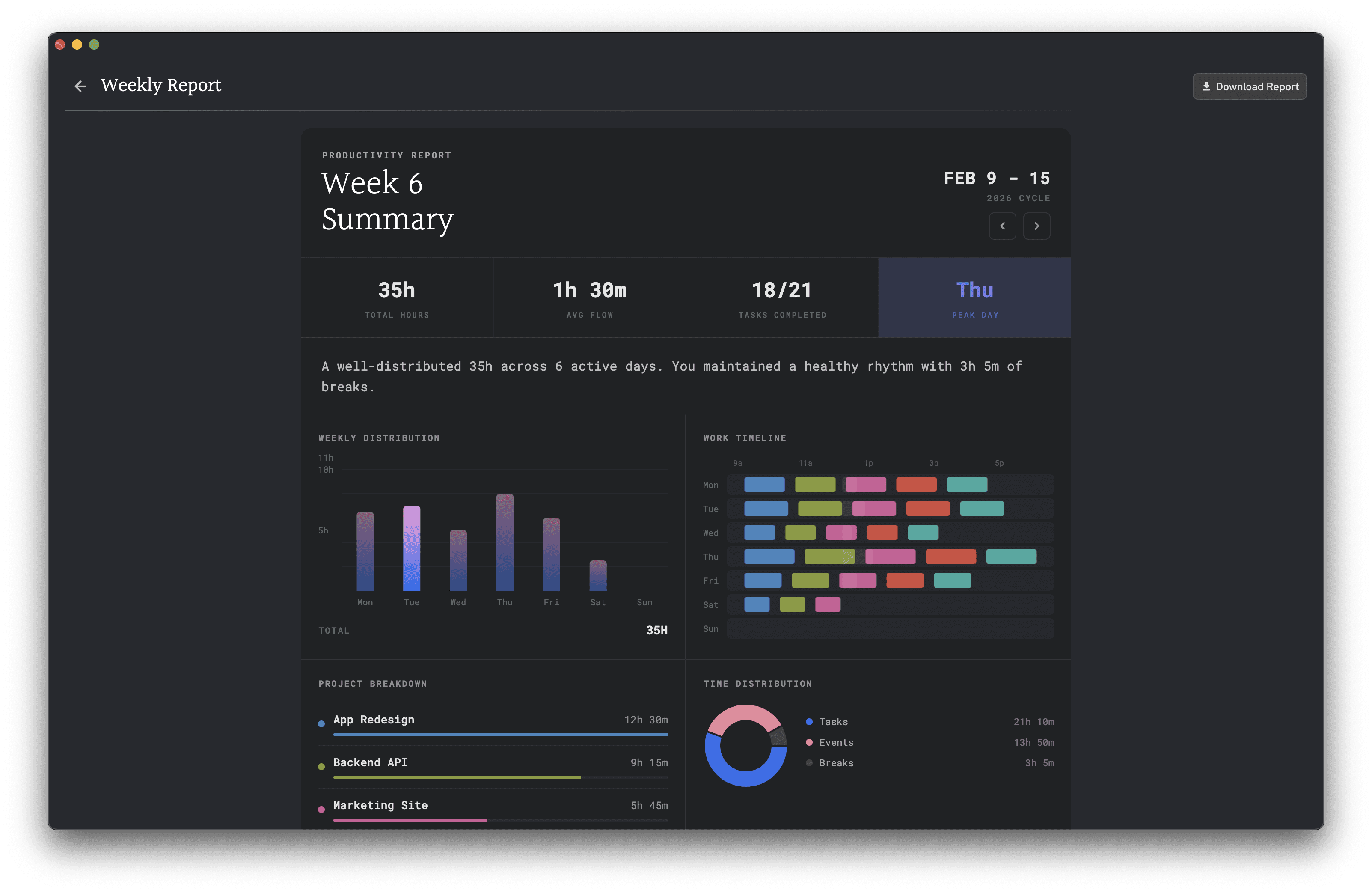
Quick Capture (Option+Space) is the entry point for everything that comes in during the day. When you process your inbox in the Planning View (Shift+P), short tasks that can be done immediately do not need to be scheduled - dispatching them clears the inbox rather than adding planning overhead for something that takes less time to do than to plan.
How To Start Tomorrow
During your next planning session or inbox review, apply the rule directly: for each item, ask whether it takes less than two minutes. If yes, do it immediately before moving on. If no, schedule it. Track how many items fall into each category. Most people find a significant portion of their list consists of things that could have been done in the moment they were captured.
Related Principles
Cognitive Offloading - immediate completion closes loops
Zeigarnik Effect - doing tiny tasks eliminates burden
Deep Work - suspend rule during focus
Task Switching - dispatch during planning avoids mid-task switching
Related Reading
Best AI Task Managers for Mac — Task managers that make it easy to capture, act on, or defer tasks in seconds.
Best Productivity Systems for High Performers — Systems that integrate the two-minute decision into daily triage.
Best AI Daily Planning Tools — AI planners that sort your task list so the two-minute calls are obvious at a glance.
Frequently Asked Questions
What is the two-minute rule?
The two-minute rule is a heuristic from David Allen's Getting Things Done: if a task can be completed in two minutes or less, do it immediately rather than adding it to a list. The rationale is that the overhead of capturing, scheduling, and returning to a tiny task — the cognitive and logistical cost of the system — exceeds the cost of simply doing it now.
When should you follow the two-minute rule and when should you ignore it?
Follow it for genuinely trivial tasks that have arrived at an appropriate moment — processing an email during a designated inbox window, for instance. Ignore it during protected focus blocks, where interrupting deep work to handle a two-minute task destroys far more value than the task saves. The rule is a triage heuristic for processing time, not a licence to respond immediately to any incoming demand regardless of context.
Does the two-minute rule lead to constant interruption?
It can, if applied without boundaries. Applied correctly — during designated processing windows rather than during focus work — it reduces system overhead by preventing trivial items from accumulating. Applied incorrectly — treating every incoming two-minute request as requiring immediate action — it fragments attention and effectively abolishes focus time. The rule belongs in your inbox processing ritual, not in your focus blocks.
Is two minutes the right threshold, or should it be adjusted?
Two minutes is a practical approximation. The underlying principle is that the system cost of capturing and re-engaging with a task should not exceed the cost of doing it immediately. For people with more elaborate capture systems or longer re-engagement times, the threshold might reasonably be one minute. For people with very efficient systems, slightly longer. The number is less important than the principle of comparing action cost against system cost.
Further Reading
Allen, D. (2001). Getting Things Done: The Art of Stress-Free Productivity. Penguin. ISBN: 978-0142000281
Masicampo, E. J., & Baumeister, R. F. (2011). Consider it done! Plan making can eliminate the cognitive effects of unfulfilled goals. Journal of Personality and Social Psychology, 101(4), 667-683. DOI: 10.1037/a0024192