The Principle
The task has been on your list for two weeks. It's not particularly difficult. It's not even that time-consuming. But every time it comes up, you move to something else. You've told yourself you're waiting for the right moment, or the right energy, or more information. What you haven't acknowledged is the feeling the task produces when you think about it: a vague dread, a low-level aversion, something that makes starting feel just slightly worse than not starting.
Research by Sirois and Pychyl reframed procrastination as primarily an emotion regulation problem rather than a time management one. People don't avoid tasks because they're lazy or disorganised - they avoid them because the task triggers an unpleasant emotion, and avoidance provides immediate relief from that emotion. Steel's meta-analysis across 216 studies confirmed task aversiveness as the single strongest predictor of procrastination. The solution isn't willpower. It's addressing the emotional barrier directly.

Definition
Procrastination is not primarily a time management problem. It is an emotion regulation response. When a task generates an unpleasant emotion - dread, boredom, anxiety, uncertainty about the outcome - avoidance provides immediate relief from that feeling. The short-term relief is real, which is what makes the pattern self-reinforcing. Research consistently identifies task aversiveness as the strongest predictor of procrastination, outperforming time pressure, difficulty, and importance as factors.
What The Research Shows
Sirois and Pychyl (2013) proposed the emotion regulation framework for procrastination, arguing that avoidance is a mood management strategy rather than a time management failure.
Tice and Bratslavsky (2000) provided experimental support across several studies, showing that inducing negative mood significantly increased procrastination in 179 participants.
Steel (2007) conducted the most comprehensive empirical synthesis - a meta-analysis of 216 studies - and found task aversiveness was the single strongest predictor of procrastination (rho = 0.40), outperforming self-efficacy, task value, and time discounting as predictors. Limitation: most studies rely on self-report measures and student samples; mechanisms in clinical procrastination may differ.

What This Means
Task aversiveness is the single strongest predictor of procrastination across more than 200 studies - stronger than time pressure, difficulty, or importance. Avoidance provides immediate relief from an unpleasant feeling, which is what makes the pattern self-reinforcing.
What Most People Get Wrong
Procrastination is culturally framed as a time management problem or a character flaw.
Research reframes it as a response to emotion. The tasks people avoid most are not usually the hardest ones. They are the ones that generate an unpleasant feeling when contemplated: dread, uncertainty, boredom, fear of judgement. Avoidance provides immediate relief from that feeling. This makes willpower-based solutions poorly matched to the actual problem.
When it Fails…
Clinical procrastination may need professional support. When avoidance is connected to depression or anxiety disorders, productivity interventions are insufficient on their own.
Some aversion is well-founded. Occasionally the task is genuinely problematic - the emotion is appropriate rather than a barrier to be overcome.
Reducing the first step helps less when the weight is about completion. If the emotional charge is about what finishing the task represents, not starting it, micro-steps do not resolve it.
What This Means For You…
If you have a task that has been on your list far longer than its difficulty warrants, the most useful question is not "why haven't I done this" but "what does this task make me feel?" The answer is usually one of a small set: boring, overwhelming, unclear where to start, associated with potential failure or judgement, or connected to a relationship or situation that carries its own emotional charge. Once you've named the feeling, you can address it - by making the entry point smaller, by reframing what done looks like, or simply by acknowledging the aversion rather than pretending it isn't there.
How Aftertone Implements It.
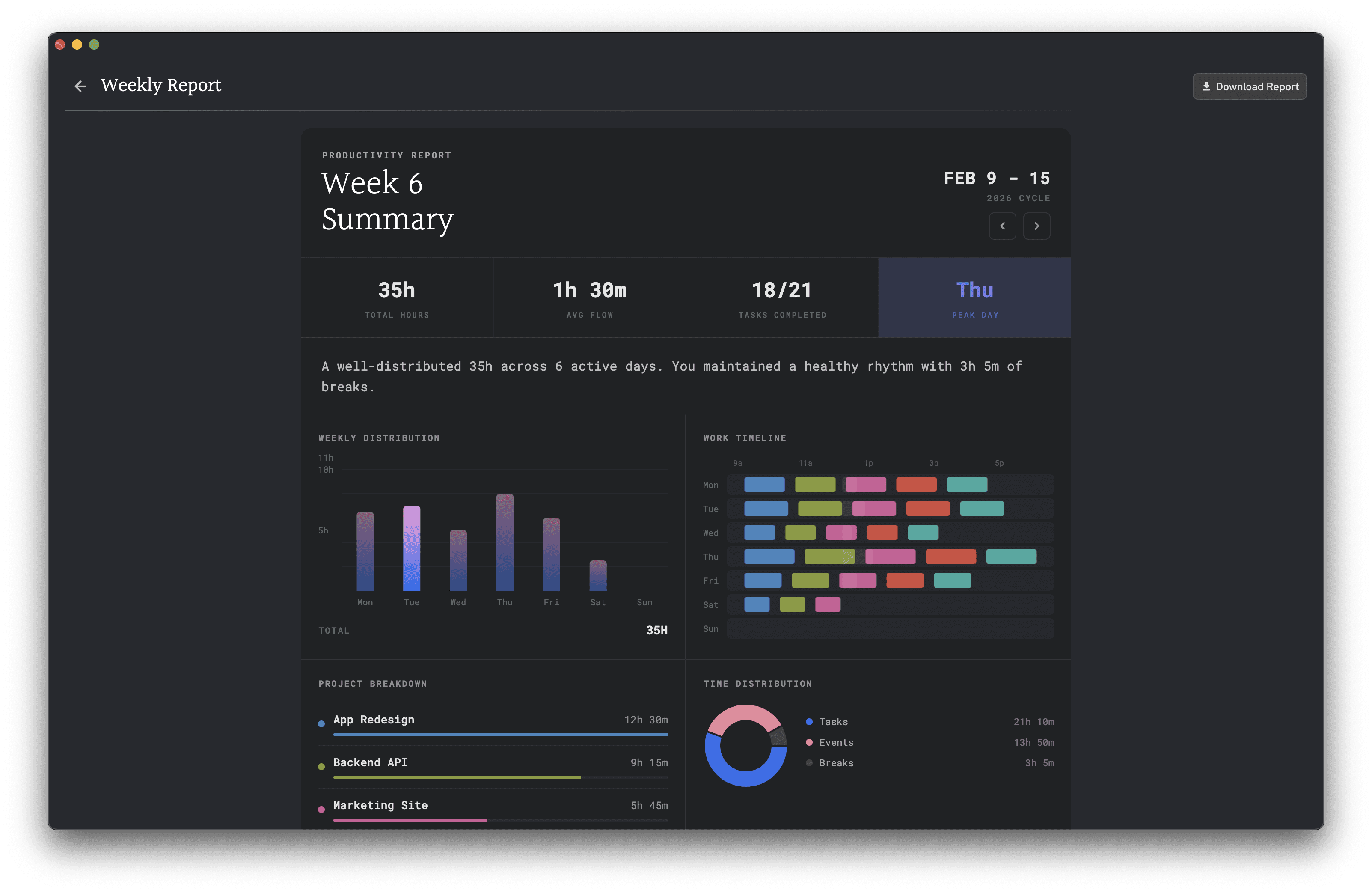
Tasks in Aftertone can be replanned at any time with P - moving a task that is stuck to a future date takes one keystroke and is framed as scheduling, not failure. The task notes field is where you can write the smallest possible first action before a session starts, so arriving at the task in Focus Mode means arriving at a specific instruction rather than the full weight of the project.
How To Start Tomorrow
Pick the task you've been avoiding longest. Before trying to do it, write one sentence completing this prompt: "I've been avoiding this because it makes me feel..." Don't judge the answer - just name it. Then write the smallest possible first action - something that takes less than five minutes and is too small to fail. Do only that. Notice whether naming the emotional barrier changes your relationship with starting.
Related Principles
Perfectionism - triggers emotional aversion
Specificity Effect - concrete steps reduce overwhelm
Implementation Intentions - pre-commit past barriers
ADHD - emotional dysregulation amplifies procrastination
Related Reading
Best AI Daily Planning Tools — Planning tools that reduce task aversiveness by breaking things into concrete next steps.
Best Deep Work Apps — Focus apps that lower the activation energy for starting — the practical fix for avoidance.
Best AI Productivity Apps for ADHD — Procrastination rooted in emotion regulation is especially common in ADHD — these apps account for it.
Frequently Asked Questions
Why do people procrastinate?
The research of Pychyl and Sirois identifies procrastination primarily as an emotion regulation problem rather than a time management problem. People avoid tasks not because they lack the time or ability to do them, but because those tasks are associated with negative emotions — boredom, anxiety, frustration, self-doubt, resentment — and avoidance provides immediate relief from those feelings. The future cost is real but distant; the emotional relief is immediate and certain.
What is the difference between procrastination and laziness?
Laziness is a general disinclination toward effort. Procrastination is task-specific avoidance driven by emotional aversion to a particular task. Chronic procrastinators are often highly productive on tasks they find engaging — the avoidance is selective, not general. Calling procrastination laziness misdiagnoses the problem and points toward the wrong solutions: willpower and discipline address laziness but not the emotional avoidance mechanism.
Does procrastination get worse under stress?
Yes — and this creates a self-reinforcing cycle. Procrastination relieves short-term stress by removing the aversive task from immediate attention. But the unfinished task generates its own stress through Zeigarnik-effect intrusions and deadline proximity. This secondary stress makes the task feel more aversive, increasing the pull of avoidance, which delays completion further, compounding the stress. Breaking the cycle requires addressing the emotional aversion, not just the time management.
What actually helps with procrastination?
Approaches that target the emotional mechanism rather than the time management symptoms are most effective. These include: reducing task aversion by breaking tasks into smaller, less threatening steps; self-compassion after lapses, which Neff's research shows predicts better re-engagement than self-criticism; temptation bundling to change the emotional valence of the task; and implementation intentions to reduce the moment-of-decision friction where avoidance typically occurs.
Further Reading
Sirois, F. M., & Pychyl, T. A. (2013). Procrastination and the priority of short-term mood regulation: Consequences for future self. Social and Personality Psychology Compass, 7(2), 115-127. DOI: 10.1111/spc3.12011
Steel, P. (2007). The nature of procrastination: A meta-analytic and theoretical review. Psychological Bulletin, 133(1), 65-94. DOI: 10.1037/0033-2909.133.1.65