The Principle
You set a goal. You care about it. You have good reasons for it. And then Thursday arrives and you still haven't started, and you have a familiar feeling — not quite guilt yet, but the shadow of it. A pre-emptive sense of how bad it will feel on Friday if you look back at the week having not done the thing. That feeling, when deliberately engaged, is one of the more reliable motivators in the behavioural literature.
Anticipated regret is the emotion of pre-feeling regret about an action you have not yet taken — or failed to take. It is distinct from general motivation (wanting the positive outcome), from guilt (feeling bad about past failure), and from fear (anxiety about negative consequences). The research shows it operates as an independent motivational force that predicts follow-through even controlling for intention strength, motivation, and attitude. Crucially, it works particularly well for inaction — for the things you intend to do but keep not doing.

Definition
Anticipated regret is the prospective emotion of imagining how one will feel having failed to act on an intention. It is distinct from regret (which is retrospective) and from general motivation (which concerns desired outcomes). Research shows it is a reliable independent predictor of behaviour change, particularly for health behaviours, voting, and follow-through on intentions — and that it can be deliberately activated through simple prompts.
What The Research Shows
Abraham & Sheeran (2003) found that asking people to consider how they would feel if they failed to exercise significantly increased exercise rates over the following week, over and above the effect of intention alone. Sheeran & Webb (2016) reviewed the role of anticipated regret across the intention-behaviour literature, synthesising evidence from multiple studies and finding a moderate-to-strong association (r = 0.32) between anticipated regret and follow-through across health, social, and professional domains. Zeelenberg & Pieters (2007) showed that anticipated regret affects decision-making by increasing the salience of forgone options — making inaction feel more costly in advance. Richard, van der Pligt & de Vries (1996) demonstrated that the effect is specific to imagined emotional experience, not just cognitive evaluation of consequences — the feeling, not just the calculation, does the motivational work. Limitations: most studies are in health behaviour contexts; generalisation to complex knowledge work tasks involves additional assumptions.

What This Means
Asking yourself "how will I feel on Friday if I haven't done this?" is not a productivity trick — it is activating a well-evidenced motivational mechanism that operates separately from your stated desire for the outcome. You can want to finish the project and still not start it. But pre-feeling the regret of not having started is a different motivational signal that the research shows meaningfully predicts whether you will.
What Most People Get Wrong
Most motivation strategies focus on positive visualisation — imagining the good outcome of completing a task.
The research on mental contrasting (WOOP) and anticipated regret both suggest this is incomplete. Positive visualisation alone tends to reduce motivation by producing premature satisfaction. Anticipated regret works differently: it increases the psychological cost of inaction without requiring the task itself to be more appealing. For tasks that are genuinely not intrinsically enjoyable — the admin, the difficult conversation, the report that needs writing — anticipated regret is often a more reliable lever than positive framing.
When it Fails…
Chronic regret sensitivity can backfire. People who ruminate heavily or have anxiety disorders may find that anticipated regret amplifies avoidance rather than motivating action — the imagined failure feels too aversive to engage with.
The emotion must feel genuine. Abstractly calculating future regret without actually pre-feeling it produces weaker effects. The motivational work is done by the emotional simulation, not the cognitive recognition.
Overuse diminishes the effect. Like most emotional motivators, anticipated regret loses potency when applied habitually to every decision — its signal value depends partly on selective use for genuinely important choices.
What This Means For You…
When you find that positive motivation for an important task is not moving you, try the anticipated regret prompt instead: close your eyes for thirty seconds and specifically imagine how you will feel this time next week if the task is still undone. Not the abstract consequence — the actual emotional texture of that moment. The research shows this activates a distinct motivational signal that predicts follow-through independently of your current level of motivation or enthusiasm. It is particularly useful for tasks you keep intending to do but keep deferring — exactly the category where standard motivation tends to fail.
How Aftertone Implements It.
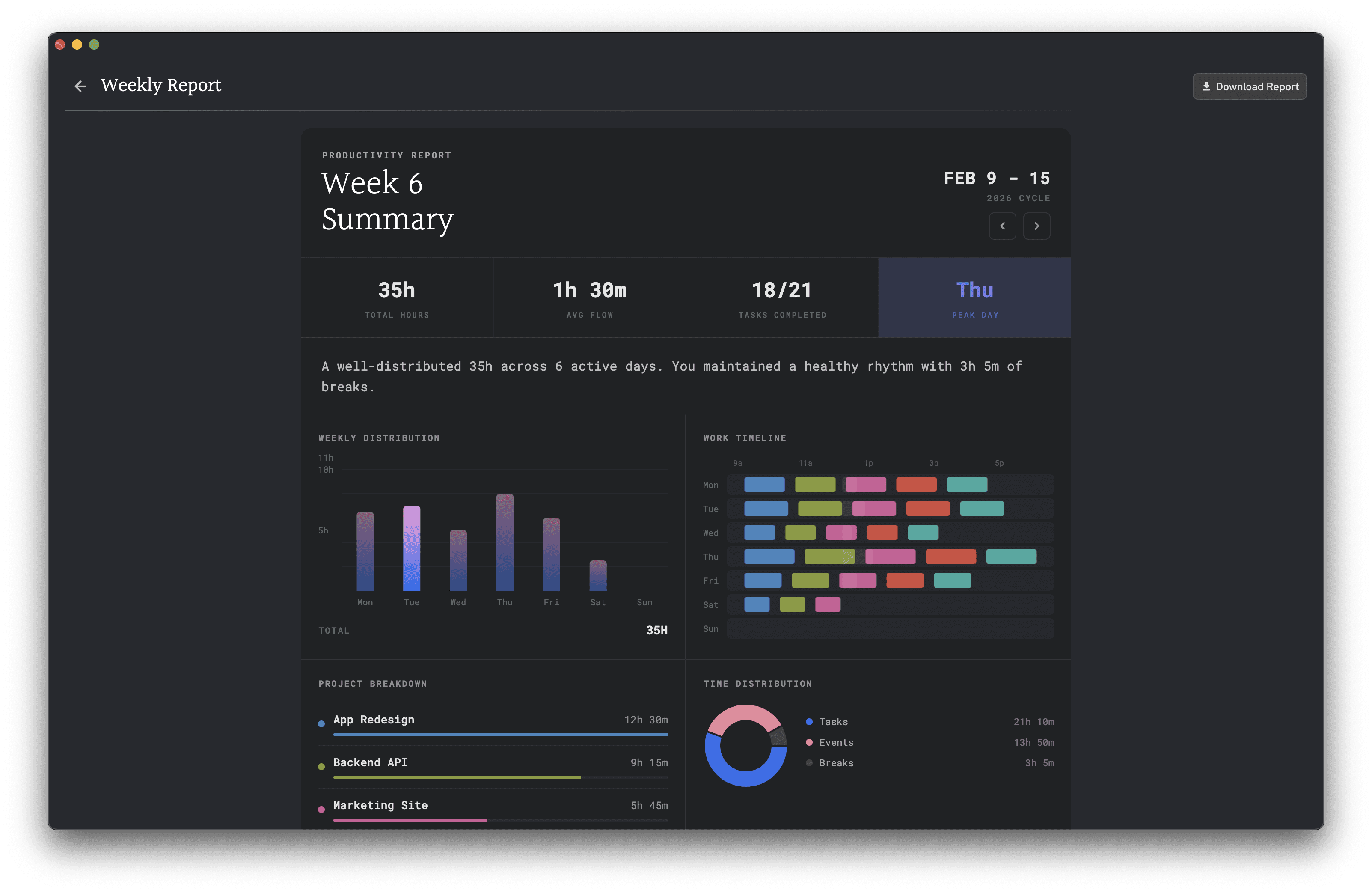
The planned vs actual review in Aftertone's weekly report surfaces anticipated regret naturally — showing which intended tasks were not completed creates exactly the emotional signal that the research identifies as motivationally active. Seeing a pattern of repeated deferral of the same task produces a form of anticipated regret about next week's review before it has happened. This is not an accident of design: making patterns visible is the mechanism by which the system activates the motivational forces that informal systems leave dormant.
How To Start Tomorrow
Pick one task you have been deferring. Set a timer for sixty seconds. Spend that sixty seconds imagining specifically — not abstractly — how you will feel at the end of this week if the task is still undone. Where you'll be, what you'll be thinking, how it will sit with you over the weekend. Then notice whether your motivation to start it has changed. That shift, if it occurs, is anticipated regret doing the work the research says it does.
Related Principles
Mental Contrasting / WOOP — WOOP combines positive visualisation with obstacle anticipation; anticipated regret is a complement that focuses specifically on the emotional cost of inaction
Procrastination as Emotion Regulation — procrastination avoids the discomfort of starting; anticipated regret creates a competing discomfort that can outweigh avoidance motivation
Self-Monitoring — tracking intended vs completed tasks makes the conditions for anticipated regret visible and specific rather than vague
Planned vs Actual — the gap between what was planned and what was done is the data that makes anticipated regret concrete rather than abstract
Related Reading
Best Time Blocking Apps — Scheduling important work in advance makes the cost of skipping it concrete — anticipated regret made visible.
Best AI Daily Planning Tools — Planners that surface what you committed to before you decide whether to follow through.
Best Productivity Systems for High Performers — Systems that make future-you part of the planning process.
Frequently Asked Questions
What is anticipated regret?
Anticipated regret is the prospective experience of imagining how you will feel having failed to act on an intention — pre-feeling regret before it has occurred. It is distinct from regret (which is retrospective), from fear (which concerns external consequences), and from general motivation (which concerns the desired positive outcome). Research shows it operates as an independent motivational signal that predicts follow-through above and beyond stated intention.
How effectively does anticipated regret increase follow-through?
Sheeran and Webb's review of the intention-behaviour literature found a moderate-to-strong association (r = 0.32) between anticipated regret and follow-through across health, voting, and professional contexts. Abraham and Sheeran's 2003 study found that asking people to consider how they would feel if they failed to exercise significantly increased exercise rates over the following week, above and beyond the effect of intention strength alone.
Why does anticipated regret work when positive motivation doesn't?
Positive motivation (imagining the good outcome) tends to reduce drive by producing premature satisfaction — the brain partially registers the imagined achievement as real. Anticipated regret works differently: it increases the psychological cost of inaction without producing any premature satisfaction. For tasks that are not intrinsically enjoyable, imagining future regret about not doing them is often a more reliable motivator than imagining positive outcomes from completing them.
When should you use anticipated regret as a motivational tool?
It is most effective for tasks you genuinely intend to do but repeatedly defer — the category where standard motivation fails. Use it selectively rather than habitually: applied to every decision, it loses its motivational signal through habituation. It is also less appropriate for people with high regret sensitivity or anxiety, where imagining negative futures can amplify avoidance rather than action. A brief, specific simulation of future regret — not prolonged rumination — is what the research supports.
Further Reading
Abraham, C., & Sheeran, P. (2003). Acting on intentions: The role of anticipated regret. British Journal of Social Psychology, 42(4), 495-511. DOI: 10.1348/014466603322595248
Sheeran, P., & Webb, T. L. (2016). The intention-behaviour gap. Social and Personality Psychology Compass, 10(9), 503-518. DOI: 10.1111/spc3.12265