The Principle
You know the difference between urgent and important. You've heard the Eisenhower matrix. You agree with the principle. And yet you still spent the morning on emails, handled the request that arrived this afternoon, and ended the day without touching the strategic work you had planned to do. This is not a failure to understand prioritisation. It is the mere urgency effect in operation.
Zhu, Yang, and Hsee at the University of Chicago documented a systematic bias: people prefer to complete tasks that have an expiring time component — even when objectively less valuable — over tasks that are more important but have no expiry. The urgency itself, independent of actual importance or consequence, generates a pull that overrides rational prioritisation. The researchers called it "mere" urgency to emphasise that the time pressure is doing motivational work independently of any real consequences attached to it.

Definition
The mere urgency effect is the tendency to prioritise time-sensitive tasks over more important tasks lacking a time constraint, even when people know the important task is more valuable and even when the urgent task's deadline carries no real consequence. The temporal pressure of urgency acts as an independent motivational signal that competes with and often overrides deliberate prioritisation.
What The Research Shows
Zhu, Yang & Hsee (2018) ran six studies demonstrating the mere urgency effect. In a key experiment, participants chose between completing an urgent task (expiring soon, lower payoff) and an important task (higher payoff, no expiry) — and systematically chose the urgent one even after being explicitly told the important task was worth more. The effect persisted even when participants were reminded of the importance difference and even when the urgent task's deadline was entirely artificial. The researchers identified two mechanisms: urgency cues shift attention to the time dimension and away from the value dimension, and the completion of urgent tasks provides more immediate closure. Limitations: studies used relatively simple laboratory tasks; real-world urgency often carries genuine consequences that compound the effect beyond mere urgency alone.

What This Means
The Eisenhower matrix tells you what to prioritise. The mere urgency effect explains why you won't. Understanding the distinction between urgent and important is necessary but not sufficient — because urgency exerts a motivational pull that bypasses deliberate prioritisation. A task with a deadline, a notification, or any time-sensitive framing will pull attention toward it independent of its actual value. Structuring your day to protect against this pull requires more than knowing what matters. It requires removing or deferring urgent signals during the time you have allocated to important work.
What Most People Get Wrong
The standard advice is to prioritise ruthlessly and ignore the urgent in favour of the important.
The mere urgency research shows this is harder than it sounds — not because people misunderstand the principle but because urgency exerts a genuine motivational force that feels like a good reason to act. The emails feel pressing. The Slack message feels like it needs a response. The small task that will expire feels like it should be cleared. Each of these feelings is the mere urgency effect, and they are largely independent of whether the tasks are actually important. The practical solution is structural: protect the time for important work before urgent tasks surface, and batch urgent tasks into designated windows rather than allowing them to compete in real time.
When it Fails…
When urgency and importance genuinely align. For tasks that are both time-sensitive and important, the urgency effect reinforces rather than distorts prioritisation. The problem is specific to the quadrant where urgency and importance diverge.
Highly structured roles may experience the effect less. People whose work is tightly scheduled and externally managed have fewer competing urgent signals to contend with, reducing the frequency of urgency-importance conflicts.
The effect weakens when people pre-commit to important tasks. Implementation intentions and time-blocking partially counteract mere urgency by anchoring important tasks to specific times — creating a competing structure to the urgency pull.
What This Means For You…
If your most important work consistently gets displaced by urgent tasks, the solution is not better prioritisation in the moment — it is structural protection before the urgent signals arrive. Block time for your most important task before your day begins to receive urgent inputs. Close communication channels during that block. Treat the block as a pre-commitment against which urgent tasks must compete rather than an intention that urgency gets to override. The mere urgency effect is most powerful when urgent and important tasks are competing in real time with equal access to your attention. Remove that competition by sequencing, not by willpower.
How Aftertone Implements It.
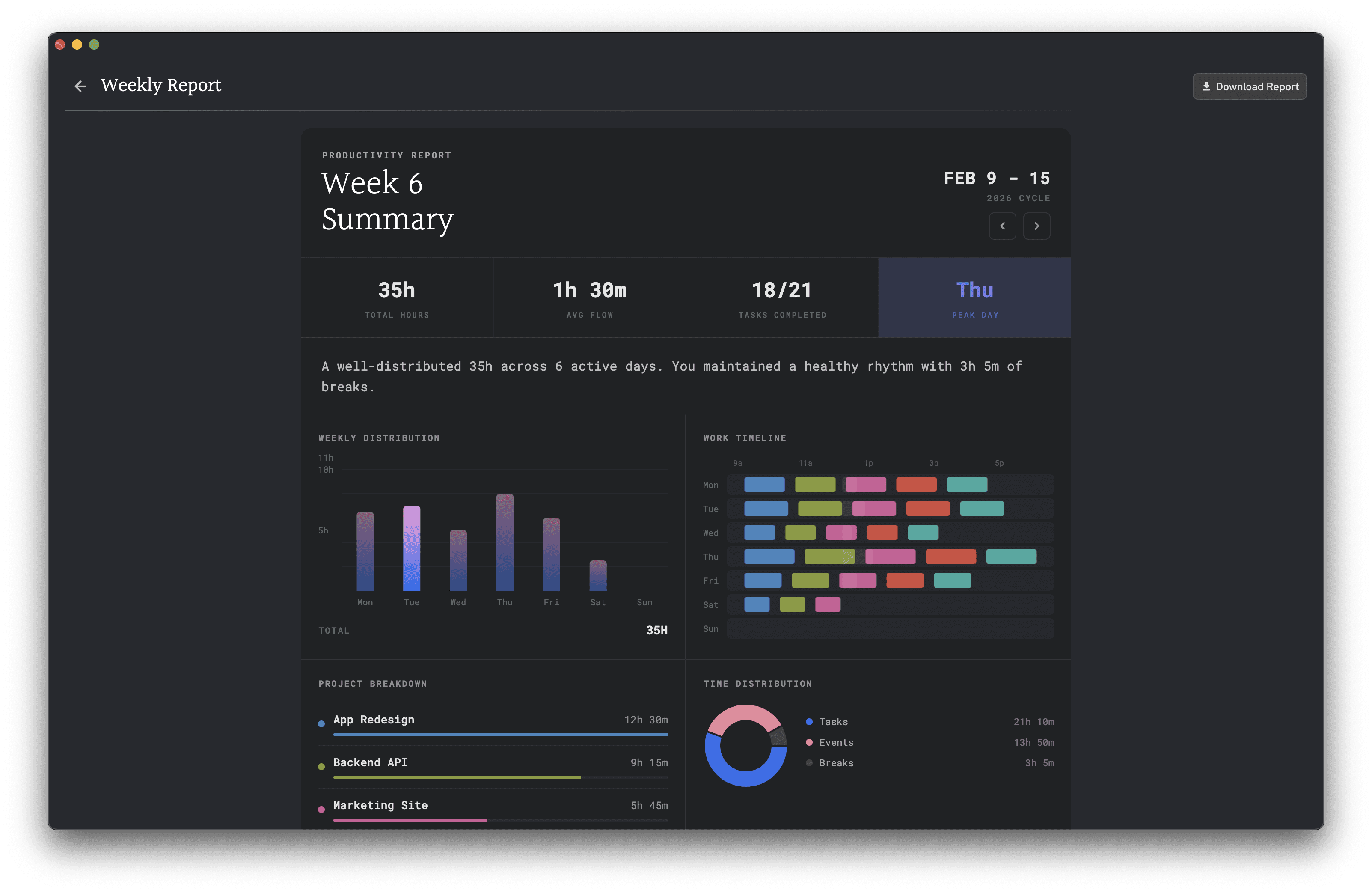
Aftertone's Focus Mode directly addresses the mere urgency effect by removing the competing urgent signals during scheduled important work. When a focus block is active, notifications are suppressed and the interface presents only the intended task — eliminating the urgency cues that would otherwise compete for attention. The morning planning ritual, done before reactive work begins, ensures important tasks are scheduled before urgent ones arrive. This is structural protection against the urgency effect rather than an attempt to override it through willpower in the moment.
How To Start Tomorrow
Tomorrow morning, before opening email or Slack, spend ten minutes identifying your one most important task for the day and starting it. Do not open any communication channels until you have spent at least 25 minutes on that task. You are protecting important work from the urgent signals that haven't arrived yet. Notice whether the tasks that felt urgent when you eventually opened them were actually as important as the work you protected. That gap is the mere urgency effect measured in your own day.
Related Principles
Task Prioritisation Frameworks — the Eisenhower matrix describes the urgency-importance distinction; the mere urgency effect explains why the matrix is hard to act on
Deep Work — deep work blocks work partly because they create a protected period in which urgent signals cannot compete with important work
Notification Distraction — notifications are urgency signals; their motivational pull on attention is the mere urgency effect in its most common form
Decision Batching — batching urgent tasks into designated windows prevents them from competing in real time with important scheduled work
Related Reading
Best Time Blocking Apps — Blocking important work first makes it harder for urgent-but-trivial tasks to displace it.
Best AI Daily Planning Tools — AI planners that schedule based on importance, not just what surfaced most recently.
Best Productivity Systems for High Performers — Systems that define your top priorities before the day's urgencies arrive.
Frequently Asked Questions
What is the mere urgency effect?
The mere urgency effect, documented by Zhu, Yang and Hsee (2018), is the tendency to prioritise time-sensitive tasks over more important tasks that lack a deadline — even when people know the important task is more valuable. The urgency itself, independent of actual consequence or importance, generates attentional and motivational pull that overrides deliberate prioritisation. It is 'mere' urgency because the time pressure does motivational work regardless of real stakes.
Why does urgency beat importance even when people know better?
Two mechanisms work together. First, urgency cues shift attention to the time dimension, making deadline proximity cognitively salient and crowding out importance as a decision criterion. Second, completing urgent tasks provides immediate closure — a definitive end state — that non-urgent important tasks do not. The combination means urgency feels more actionable and more satisfying to address, independent of its actual value.
How is the mere urgency effect different from rational time management?
Rational time management would have you weigh the value and deadline of each task and prioritise accordingly. The mere urgency effect shows that the deadline cue — urgency — exerts an independent pull that distorts this weighting. People in Zhu's studies chose urgent low-value tasks over important high-value tasks even after being explicitly reminded of the value difference. The bias operates below the level at which knowledge of prioritisation principles can fully correct it.
What is the most effective defence against the mere urgency effect?
Structural protection before urgent signals arrive. Completing your highest-priority work in a protected block at the start of the day — before email, Slack, or other urgency-generating channels are opened — means important work cannot be displaced because the competing signals have not yet surfaced. Once urgency cues are present and competing with important work in real time, the willpower cost of choosing important over urgent is much higher than pre-emptive structural protection.
Further Reading
Zhu, M., Yang, Y., & Hsee, C. K. (2018). The mere urgency effect. Journal of Consumer Research, 45(3), 673-690. DOI: 10.1093/jcr/ucy008