The Principle
You didn't change anything. The work is the same, the habits are the same, the goals are the same. But it's Monday morning, or the first of the month, or just after your birthday — and somehow it feels like a better time to start. That feeling is not irrational sentiment. It is a documented, replicable psychological mechanism.
Hengchen Dai and colleagues coined the term "temporal landmarks" for the dates that act as natural dividers between past and future selves. New Years, Mondays, birthdays, seasonal changes — all produce a measurable spike in aspirational behaviour. Google searches for "diet" and gym sign-ups both peak reliably on these dates. The mechanism is that landmarks help people relegate their past imperfect self to the previous period, creating psychological distance from failures and renewed motivation to begin again.

Definition
Temporal landmarks are specific calendar dates — Mondays, new months, birthdays, seasonal starts — that create a psychological separation between a past self and a future one. This separation reduces the weight of past failures and produces a measurable spike in motivation to begin new goals or resume abandoned ones.
What The Research Shows
Dai, Milkman & Riis (2014) analysed 35 million gym visits and found 33% more workouts at landmark dates (Mondays, first of month, day after birthday, day after public holidays). Google searches for "diet" spike by 82% on Mondays versus the prior Sunday. A follow-up lab study showed participants were more likely to commit to goals framed around an upcoming landmark versus an ordinary day. Limitations: observational data from one gym chain; causal mechanisms inferred but not directly manipulated.

What This Means
The calendar date you choose to start something genuinely affects follow-through — not because the date has any intrinsic power, but because certain dates reliably shift how people see their relationship to past behaviour. Monday is not better than Wednesday, but the psychological fresh-start framing it produces is real and measurable.
What Most People Get Wrong
Most people use temporal landmarks without knowing it, or dismiss the impulse as superstition.
The mistake in the first case is passive use — waiting for the landmark to arrive rather than deliberately planning around it. The mistake in the second case is dismissing the mechanism as irrational and starting on a random Tuesday with no psychological runway. Neither approach takes advantage of the effect deliberately. The research suggests that strategically timing commitments to coincide with upcoming landmarks — or artificially creating personal ones — can meaningfully improve follow-through.
When it Fails…
Serial fresh-starters gain less. People who use every Monday as a restart without changing the underlying structure rarely benefit from the mechanism alone — the fresh-start feeling masks rather than fixes the real problem.
The effect fades quickly. The motivational spike from a landmark typically lasts days, not weeks. Without implementation intentions or structural support, the pattern collapses before the behaviour is established.
Self-created landmarks are weaker. Personal milestones like birthdays produce smaller effects than socially shared ones like New Year or Mondays.
What This Means For You…
If you have been putting off starting something, Monday morning or the first of the month is a genuinely better time to start than an arbitrary Wednesday. Not because of magic, but because the research shows your brain will frame it differently, reduce the weight of past failures, and produce more motivational energy. Use this deliberately: schedule your harder resets for Monday planning sessions, frame new quarterly goals as fresh starts, and build your weekly review around the natural psychological rhythm the research has quantified. The effect is temporary, which means the goal is to use the motivational spike to establish structure — not to rely on it perpetually.
How Aftertone Implements It.
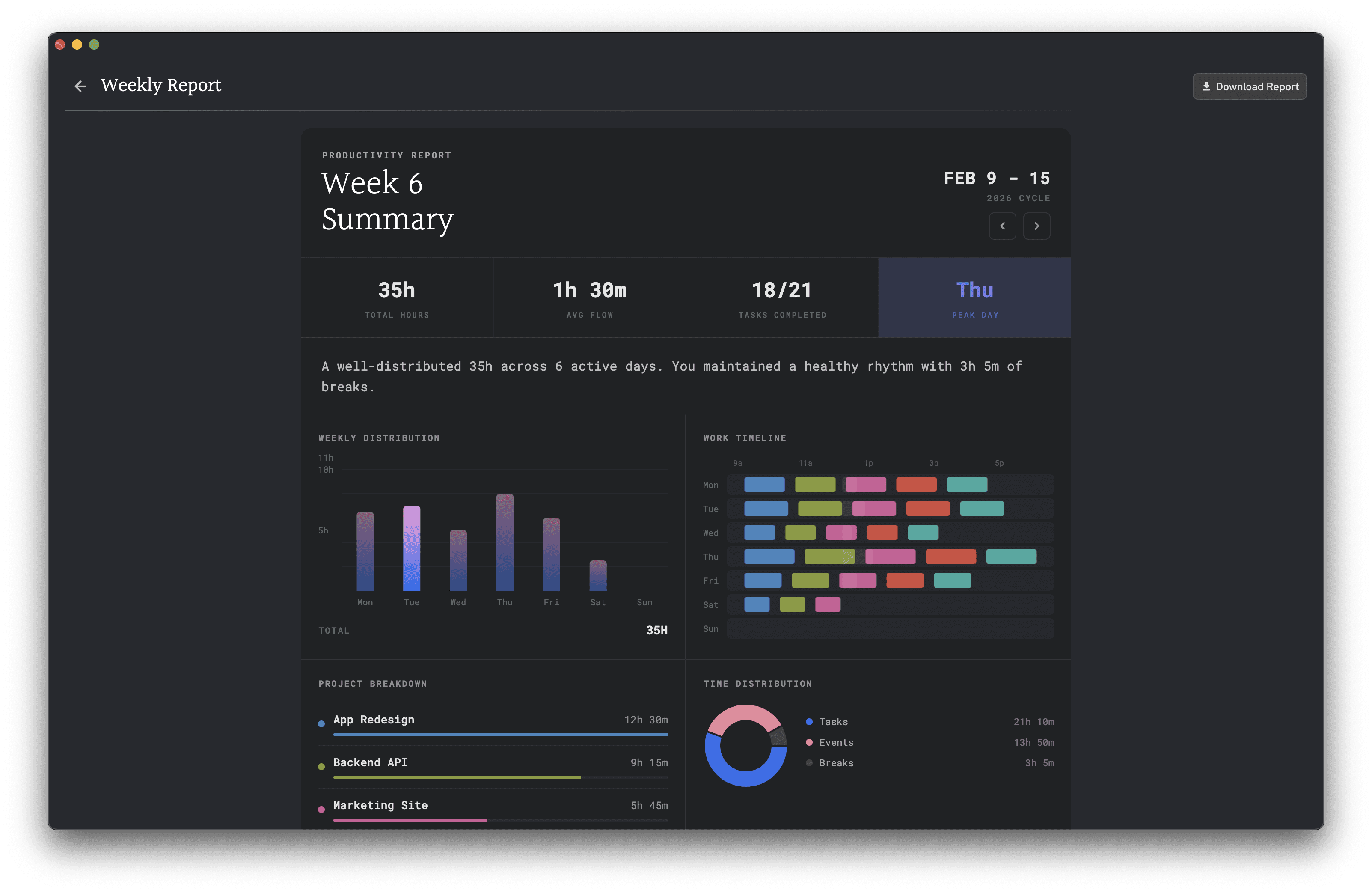
The weekly planning ritual in Aftertone is designed around Monday as a natural temporal landmark. Starting the week by reviewing your patterns, setting your top priorities, and clearing your inbox takes advantage of the fresh-start motivation that Monday produces — channelling it into a structured planning session rather than letting it dissipate. The weekly review is most effective when it coincides with the temporal reset people already feel at the start of the week.
How To Start Tomorrow
The next time you find yourself thinking "I'll start on Monday" — take that seriously instead of dismissing it. Use the Monday motivation for planning, not just intention. Spend ten minutes writing your three priorities for the week, blocking time for them, and clearing any open loops. You are using a real psychological mechanism. Make it count.
Related Principles
Weekly Reviews — the Monday planning ritual is the structural use of the weekly temporal landmark
Implementation Intentions — temporal landmarks create the motivation; implementation intentions convert it into specific plans
Self-Monitoring — landmark dates are natural review points for tracking progress
Related Reading
Best Weekly Review Apps — Weekly reviews are a built-in temporal landmark — these apps make the most of that reset.
Best AI Weekly Planning Tools — AI planning tools that help you use the start of the week intentionally.
Best Productivity Apps for Founders — Founders who use weekly planning rituals consistently outperform those who don't — these tools support that.
Frequently Asked Questions
What is the fresh start effect?
The fresh start effect, documented by Dai, Milkman and Riis, is the finding that people are significantly more likely to pursue goals and begin new behaviours at temporal landmarks — Mondays, the first of the month, after a birthday, after a holiday. These dates act as psychological dividers between a past self and a future self, reducing the weight of past failures and producing a spike in aspirational motivation.
Why do Mondays feel like a better time to start than Wednesdays?
The calendar provides a shared cultural structure in which Monday functions as a recurring fresh start. This is not superstition — the research shows gym visits increase by 33% on Mondays compared to other weekdays, and Google searches for 'diet' spike 82% on Mondays versus Sundays. The psychological mechanism is that landmarks help people mentally separate their past imperfect self from the future self they intend to become.
Does the fresh start effect last?
The motivational spike is real but temporary — it typically lasts days rather than weeks. The implication is that temporal landmarks are most valuable for initiating behaviours and commitments, not for sustaining them. The landmark provides the activation energy to start; structural supports like implementation intentions, habit stacking, and accountability are needed to maintain the behaviour past the initial window.
Can you create your own temporal landmarks?
Yes, though personal landmarks like birthdays produce smaller effects than socially shared ones like New Year or Mondays. The mechanism requires a felt sense of separation between past and future self — any event that creates that sense can function as a landmark. Deliberately framing personal milestones (a work anniversary, the start of a new project, a self-set date) as fresh starts can activate a version of the effect, particularly when the framing is shared with others.
Further Reading
Dai, H., Milkman, K. L., & Riis, J. (2014). The fresh start effect: Temporal landmarks motivate aspirational behavior. Management Science, 60(10), 2563-2582. DOI: 10.1287/mnsc.2014.1901